12 Best AI Test Automation Tools for 2026
The category has moved beyond AI-assisted test scripts. The practical question is which kind of evidence your team needs before it ships.
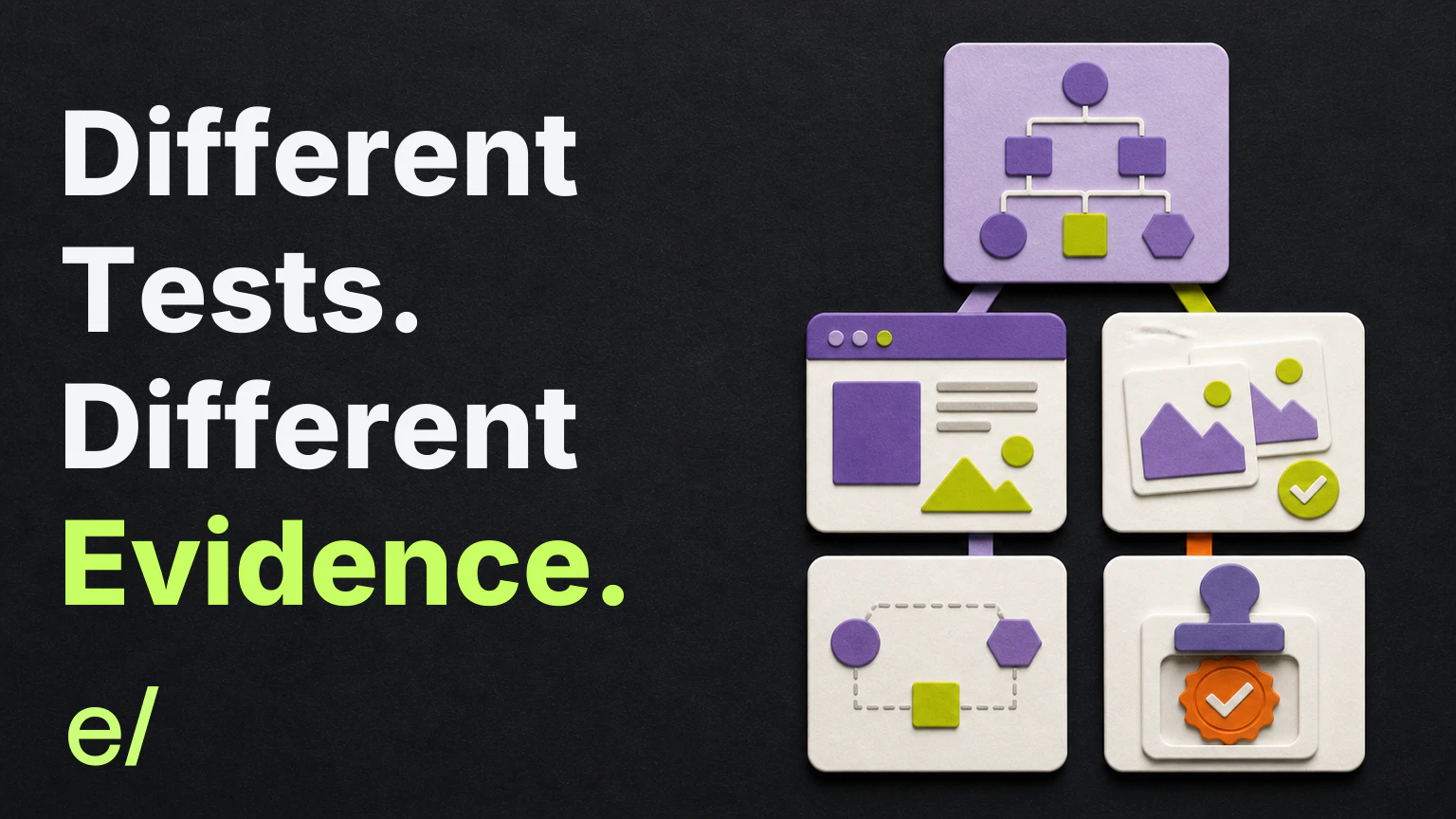
The best AI test automation tool depends on the evidence your team needs. Momentic is a strong fit for agentic end-to-end testing, TestSprite for testing alongside coding agents, Autify Aximo for autonomous cross-platform testing, and Applitools for visual validation. Early addresses a different job: release verification.
The market changed materially once coding agents became part of normal software delivery. A test tool is no longer judged only by whether it can record a browser flow or repair a selector. Teams now ask whether it can turn intent into tests, run them against real environments, explain what failed, and keep the work useful as the product changes.
That is why an older list of low-code test platforms is no longer enough. The 2026 market includes agentic testing products that act from natural-language goals, testing agents that work alongside coding agents, and systems that build or evolve end-to-end coverage from application behavior.
Best tools by use case
These are best-fit recommendations based on documented capabilities, not winners from a shared benchmark.
| Use case | Best-fit option | Why it stands out |
|---|---|---|
| Agentic end-to-end testing | Momentic | Combines goal-driven agent actions with explicit assertions and reusable steps |
| Coding-agent verification loop | TestSprite | Brings test planning, execution, and failure evidence into MCP and CLI workflows |
| Autonomous cross-platform testing | Autify Aximo | Covers web, mobile, and desktop through natural-language scenarios and visual recognition |
| Enterprise functional testing | Functionize Studio | Combines agent-native authoring with enterprise test-program controls |
| Frontend regression coverage | Meticulous | Builds and evolves checks from recorded application sessions |
| Existing browser and device cloud | BrowserStack Test Companion | Adds AI-assisted authoring and debugging to BrowserStack execution infrastructure |
| Visual validation | Applitools | Specializes in visual comparison across browsers and devices |
| Release verification | Early | Finds bugs, creates Fix PRs with tests, and connects findings to verification evidence |
How we selected these tools
We included products that met four conditions:
- They offered an active, documented AI capability in 2026.
- The AI supported a clear execution, maintenance, diagnosis, or verification workflow, rather than an isolated text assistant.
- Current product documentation established the supported surfaces and operating model.
- The product represented a meaningful choice for a distinct testing job.
The shortlist prioritizes current AI-native workflows and useful contrasts. It does not measure vendor size, market share, or the number of features on a pricing page. A product missing from the list may still fit a specific stack or procurement requirement.
Evidence standard: We verified every capability description against current first-party product documentation in August 2026. We did not run all 12 products against the same application, and we did not conduct a scored hands-on benchmark. The list is therefore not a numerical ranking. Each “best fit” is an editorial mapping between a documented operating model and a practical use case.
The market direction is not based only on vendor positioning. The World Quality Report 2025-26 found that 38% of respondents said their automation frameworks needed a complete overhaul, while 45% reported that developers were taking on testing work alongside coding and packaging. Tool choice now has to account for both faster automation and clear ownership of quality evidence.
What changed in AI test automation?
AI now appears across several different testing jobs:
- Agentic test execution: An agent navigates a product from a natural-language goal, with assertions around the expected result.
- Test creation and maintenance: AI creates scenarios, generates scripts, or updates tests after an application changes.
- Testing-agent loops: A testing agent works from an IDE, CLI, or MCP integration alongside the coding agent that made the change.
- Visual validation: Computer vision compares rendered output against an approved baseline.
- Release verification: A separate category that evaluates a release candidate against existing production behavior, rather than starting from a predefined test.
These are related but not interchangeable. A tool that writes a browser test may not execute it on real devices. A tool that maintains a test suite may not show what behavior outside the changed feature is at risk. A visual platform may prove that a page changed without explaining whether a business flow still works.
12 tools worth evaluating
The tools are ordered by operating model, beginning with agentic and coding-agent workflows, followed by managed platforms and specialized validation tools. The order is not a ranking.
| Tool | Primary surface | Operating model | Best fit |
|---|---|---|---|
| Momentic | Web and mobile | Agentic runtime with assertions and reusable steps | End-to-end acceptance checks |
| TestSprite | Frontend, backend, API, and AI systems | Testing agent connected through MCP and CLI | Coding-agent verification loops |
| Autify Aximo | Web, mobile, and desktop | Autonomous natural-language execution with visual recognition | Cross-platform product flows |
| mabl | Web, mobile, and API | Managed agentic coverage and test operations | Product and QA teams |
| Functionize Studio | Enterprise functional systems | Agent-native authoring, execution, and maintenance | Governed enterprise programs |
| Octomind | Web | Playwright-based creation with managed cloud runs | Portable browser tests |
| Meticulous | Frontend | Recorded behavior becomes evolving visual end-to-end checks | Broad frontend regression coverage |
| BrowserStack Test Companion | Browsers and real devices | IDE assistant connected to cloud execution | Existing BrowserStack teams |
| LambdaTest KaneAI | Web | Prompt-driven authoring connected to cloud execution | Conversational browser testing |
| Testim | Web, mobile, and Salesforce | Visual and coded authoring with AI-assisted maintenance | Flexible authoring models |
| Applitools | Visual interfaces | Baseline comparison with Visual AI | Cross-browser visual validation |
| testRigor | Web, mobile, and desktop | Plain-language end-to-end automation | Non-code test authoring |
Momentic
Momentic is an agentic end-to-end testing platform for web and mobile. Its AI action workflow lets a team define a goal and expected outcome, then lets the agent navigate the application. Momentic also distinguishes between dynamic agent actions and reusable, deterministic steps.
Best for: Teams that need end-to-end smoke or acceptance checks to survive changing interfaces without hard-coding every interaction.
Watch for: Agentic steps are useful for dynamic flows, but core checks still need explicit assertions and stable expected outcomes.
TestSprite
TestSprite positions itself as a verification loop for coding agents. Its current product materials cover frontend, backend, API, AI-agent, and model-oriented testing, with an MCP and CLI path for bringing test work into an agent workflow.
Best for: Teams building AI applications or using coding agents that want test planning, execution, and actionable failure context in the development loop.
Watch for: Assess the product on your actual environment and data setup. Autonomous test creation is only useful when the generated cases reflect the product behavior that matters.
Autify Aximo
Autify Aximo is an autonomous testing agent for web, mobile, and desktop applications. It uses natural-language scenarios and visual recognition to execute user flows without requiring conventional scripts or selectors.
Best for: Teams that need one approach across several application surfaces and want to reduce selector maintenance.
Watch for: Verify how the product handles application-specific setup, complex authentication, and the evidence available when a scenario fails.
mabl
mabl has repositioned as an agentic testing platform. Its current materials describe a managed workflow for building coverage, running tests, recovering from application changes, and analyzing failures within delivery workflows.
Best for: Product and QA teams that want a managed platform for coverage creation, execution, maintenance, and test operations.
Watch for: Run an evaluation through a real deployment workflow. The important question is how its coverage and maintenance behave after the application, data, or environment changes.
Functionize Studio
Functionize Studio is a current agent-native testing offering from Functionize. It is designed to build, run, and maintain tests from plain-language intent, with support for coding-agent integrations and enterprise test programs.
Best for: Organizations that need broad functional test automation and governance alongside an agent-driven authoring workflow.
Watch for: Enterprise breadth is valuable only if it fits your technology stack, data controls, and ownership model for generated test changes.
Octomind
Octomind is an AI-powered QA platform built around Playwright-compatible test code. It combines AI test creation, cloud execution, failure diagnosis, and self-healing maintenance, with an MCP route for agent workflows.
Best for: Web teams that want portable Playwright tests with managed execution and AI-assisted maintenance.
Watch for: Its approach is focused on web end-to-end testing. Confirm that the test code, deployment workflow, and hosting model match your existing practice.
Meticulous
Meticulous records application interactions and uses them to generate and evolve visual end-to-end tests. Its model is distinctive because it starts from observed flows and replays them against changes, rather than asking a team to author every test first.
Best for: Frontend products with many user paths where manual test-suite maintenance is the bottleneck.
Watch for: Evaluate the recording model, privacy boundaries, backend-response handling, and the kind of frontend behavior it can prove in your system.
BrowserStack Test Companion
BrowserStack Test Companion is an IDE-based testing assistant for creating test cases, writing automation scripts, debugging failures, and working with BrowserStack’s real-device and browser cloud.
Best for: Engineering and QA teams already invested in BrowserStack execution infrastructure, particularly for real-device testing.
Watch for: Review generated scripts against repository conventions and test data needs. The useful output is not a script alone, but a maintainable test inside the team’s normal workflow.
LambdaTest KaneAI
LambdaTest KaneAI is a natural-language testing agent connected to LambdaTest cloud execution. It is aimed at turning browser scenarios into automated checks without beginning from handwritten scripts.
Best for: Teams that want conversational test authoring connected to a cloud browser-testing platform.
Watch for: Include authentication, asynchronous behavior, data setup, and unexpected UI states in the evaluation. Those cases reveal whether a generated scenario remains useful outside a controlled demo.
Testim
Testim continues to offer AI-driven automation for web, mobile, and Salesforce applications. Its current approach combines visual authoring, optional code, smart locators, and agentic test creation from natural-language instructions.
Best for: Teams that need flexible authoring with a route from visual workflows to custom code.
Watch for: The value of smart locator maintenance depends on how transparently teams can review and control the changes it makes to a test.
Applitools
Applitools specializes in visual validation. Its Visual AI compares rendered application output with approved baselines and helps teams assess meaningful visual differences across browsers and devices.
Best for: Customer-facing products, design systems, and teams where a functional pass is not enough to establish that the interface still looks correct.
Watch for: Visual evidence complements functional and API checks. Teams still need clear baseline ownership and a process for deciding which visual changes are expected.
testRigor
testRigor uses plain-language instructions for end-to-end automation across web, mobile, desktop, and other surfaces. It is aimed at making test creation and maintenance accessible to a wider group than conventional code-first frameworks.
Best for: QA and product teams that want to describe user behavior in plain language and maintain end-to-end checks without managing selectors directly.
Watch for: Plain language still needs precise expected outcomes, data, and environment control. Ambiguous instructions create ambiguous tests.
The missing category
The tools above primarily begin with a test or a workflow. They help a team write it, execute it, maintain it, or understand its result. That matters, especially when coding agents make it possible to change more software faster.
But an agent-generated test suite does not answer every release question. A release owner also needs to know what existing behavior a candidate could change outside the feature or PR under review. That is a release verification problem.
Early Release Guard finds new bugs, existing defects, and regressions within the configured analysis scope. Comparing a release candidate with the production baseline remains one capability, explained in Regression Intelligence.
After authorized initiation for an eligible finding, Early implements the fix and creates a Fix PR with tests for the affected behavior. Engineers review, amend, and decide whether to merge.
Early complements test automation and QA rather than replacing them. Engineering, QA, product, and release owners still decide what verification is needed and whether to ship.
Release verification is a distinct category from test automation. Tests establish that defined scenarios behave as expected. Release verification asks where a proposed change could alter existing behavior, including behavior that no one thought to encode as a test for that release. Together, they give a team better evidence before production.
| Test automation | Release verification | |
|---|---|---|
| Starts from | A defined test or scenario | A release candidate and production baseline |
| Primary unit | A test, script, or workflow | Existing product behavior |
| Main question | Did this scenario pass? | What behavior could this release put at risk? |
| Evidence | Test results, traces, and screenshots | Behavioral impact surfaced for human review |
How to choose a tool
Start by naming the job you need the tool to do. A strong evaluation includes a real repository, a realistic environment, and at least one intentional product change.
Match the tool to the system
Decide which surfaces need evidence: web, mobile, API, desktop, enterprise platforms, visual output, or an AI application. Remove tools that cannot reach the systems that matter before comparing feature lists.
Test the second run
Every vendor can demonstrate a first generated test. Ask for the second run after a UI, data, dependency, or expected-behavior change. The maintenance and diagnosis workflow matters more than the first prompt.
Inspect the failure evidence
Check what a tester can see when something fails: the relevant step, input, environment, screenshot, trace, logs, and suspected cause. AI explanations need to be reviewable, not merely persuasive.
Keep test ownership explicit
AI can make tests easier to create. It does not remove the need to decide what matters, approve expected behavior, investigate failures, and set release criteria. Agree on who owns each of those jobs before scaling a new platform.
AI does not replace release judgment
AI test automation can reduce repetitive work and expand the kinds of checks a team can maintain. It does not own product risk. QA, engineering, product, and release owners still decide what evidence is sufficient and what should ship.
The right platform gives those people clearer evidence. It does not turn a generated test run into an automatic approval.
Related reading
Best AI Code Review Tools in 2026 covers tools that inspect a code change before merge. Verifying AI-generated code is a different job than reviewing it explains why reviewing changed code and validating existing behavior are related but separate jobs.
FAQ
What is the best AI test automation tool?
There is no universal winner. Momentic is a strong fit for agentic end-to-end testing, TestSprite for coding-agent verification loops, Autify Aximo for autonomous cross-platform testing, Functionize Studio for enterprise functional testing, Meticulous for frontend regression coverage, BrowserStack Test Companion for existing browser and device clouds, Applitools for visual validation, and Early for release verification.
What is AI test automation?
AI test automation, sometimes called AI-powered test automation, uses language models, machine learning, or computer vision to help create, maintain, execute, or analyze software tests. Current products range from AI-assisted test creation to agents that run and maintain end-to-end checks.
How should I choose an AI test automation tool?
Choose based on the system you need to test, who will own the checks, whether you need browser, mobile, API, or visual validation, and what evidence the team needs from a failure. Test the maintenance and failure-analysis workflow, not only the first generated test.
What is the difference between AI testing and release verification?
AI testing tools generally create, run, maintain, or analyze tests. Release verification asks a different question: what existing product behavior could a release candidate change? It evaluates the release against the production baseline so teams can review the behavioral impact before shipping.
Can AI test automation replace QA?
No. AI automation can reduce repetitive work, but QA, engineering, product, and release owners still define risk, assess evidence, investigate failures, and decide what ships.