Vibe Coding Grew Up. Production Got Harder.
Claude Code and Codex made agents capable of doing the work. They did not transfer responsibility for what ships.
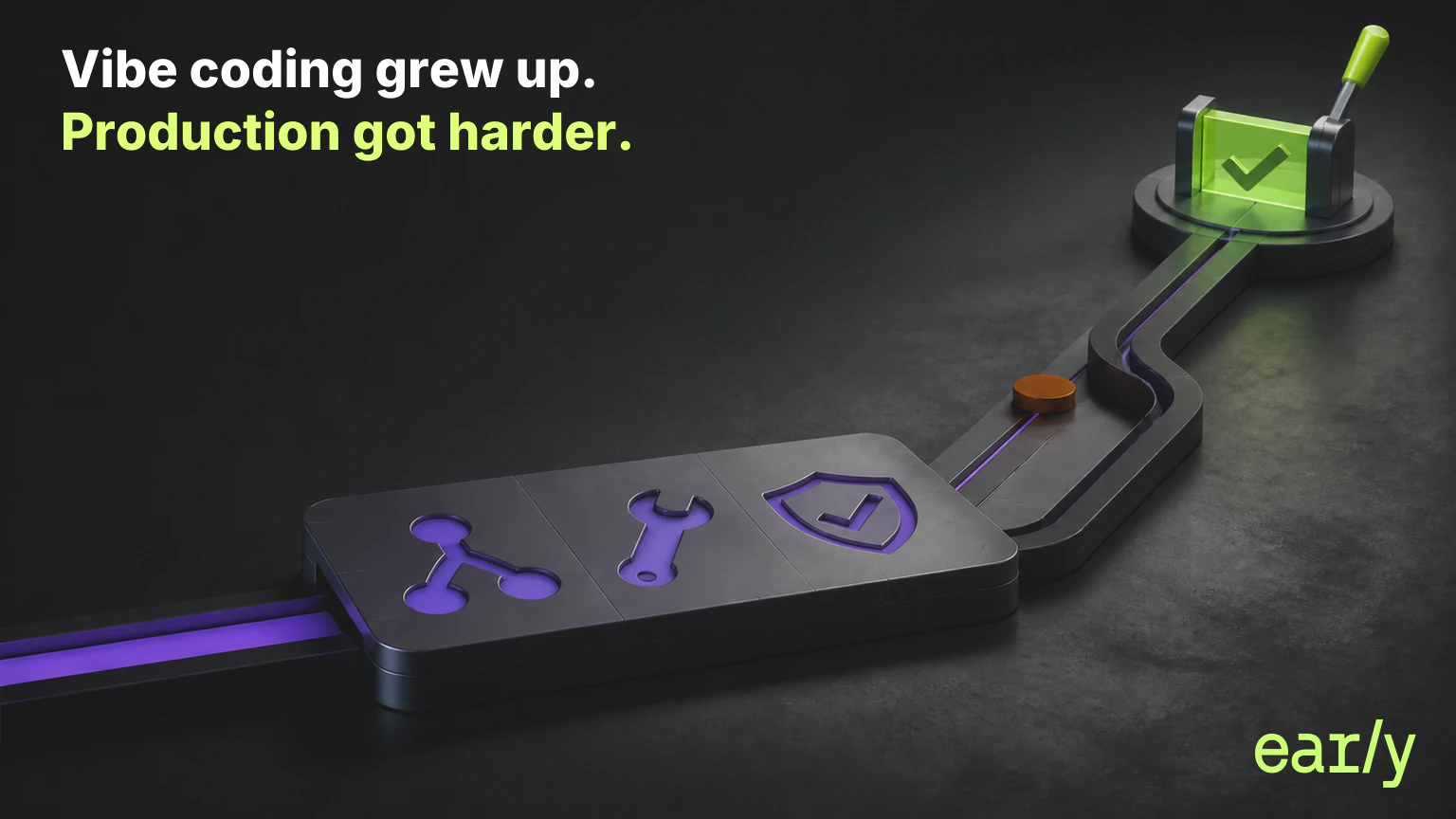
When the phrase “vibe coding” entered the software vocabulary in 2025, it described a surprisingly simple loop. Describe the outcome, let a model produce the code, try it, and keep prompting until the result feels right.
The phrase was playful. The shift was not.
One year later, the model is no longer waiting in a chat window for the next instruction. Claude Code can navigate a repository, edit multiple files, run commands, test its work, and commit a change. Codex can take on long-running tasks, work in parallel, use isolated worktrees, and hand a developer a diff to review. The prompt now starts an execution loop.
Vibe coding in 2026 means building software by describing the intended outcome while an AI system performs much of the implementation. Agentic coding goes further: the system can plan steps, use tools, inspect results, and continue working toward the goal.
That is a much bigger capability than prompt-driven code generation. The responsibilities of production engineering did not suddenly appear. They became harder to satisfy at the new rate of change. Implementation capacity expanded faster than many teams’ capacity to specify, review, verify, and own changes. The production gap became harder to ignore.
The important question is no longer whether coding agents can produce working changes. They can. The important question is what has to be true before anyone should trust those changes in production.
What Vibe Coding Means Now
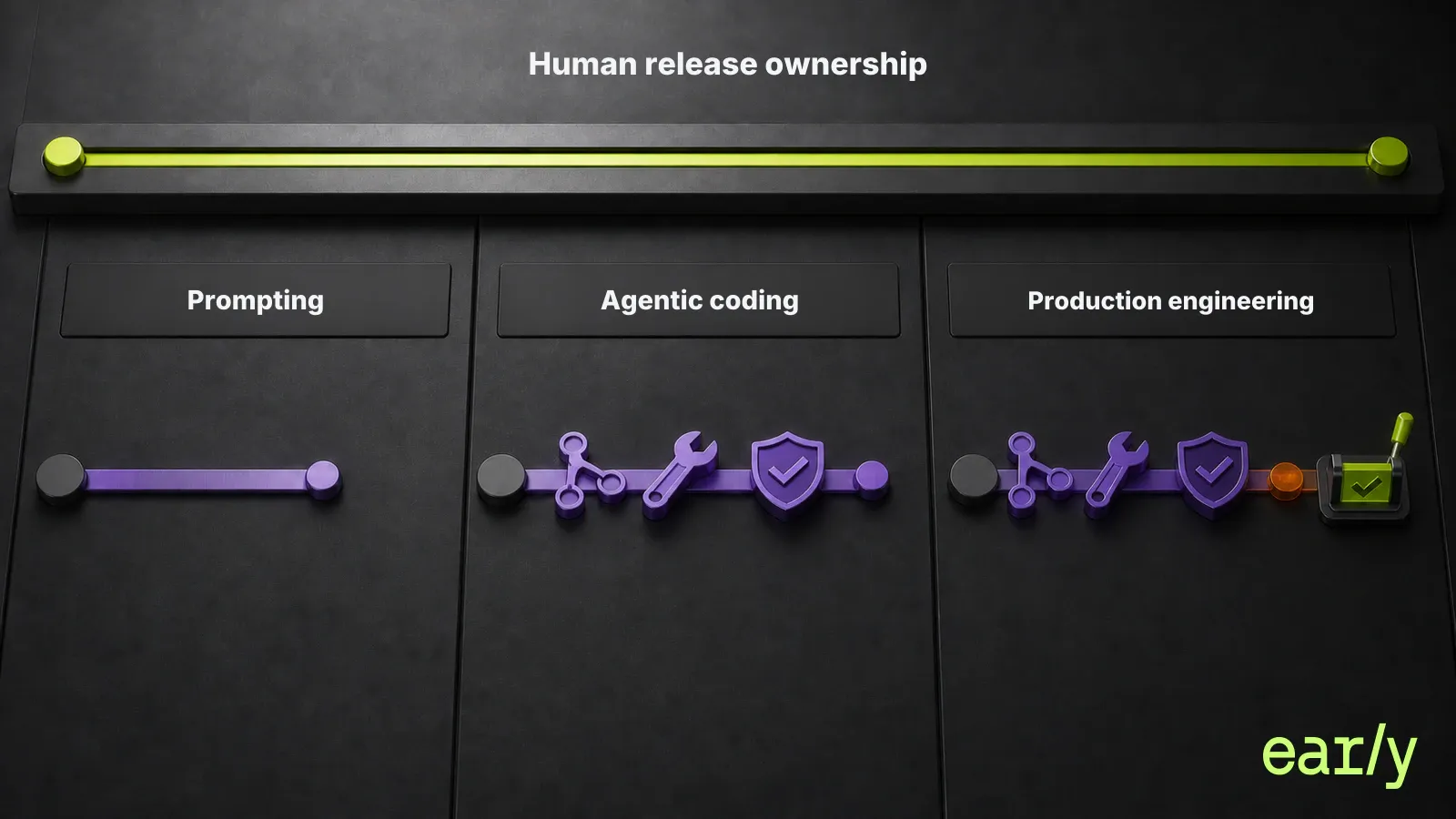
The term has become broad enough to hide three different ways of working:
| Mode | What the person provides | What the system does | Release standard |
|---|---|---|---|
| Prompt-driven generation | A request and iterative feedback | Produces code or a small application | The output works in the demonstrated case |
| Agentic coding | A task, repository, tools, and constraints | Plans, edits, runs commands, tests, and prepares a change | The task appears complete and checks have run |
| Production engineering | Intent, ownership, controls, and evidence requirements | Contributes implementation inside an accountable delivery process | The team has enough evidence to own the release |
These modes can use the same model. What changes is the operating contract around it.
Vibe coding is an interaction style. Agentic coding is a system capability. Production engineering is an organizational responsibility. Treating them as synonyms makes a successful agent run look like a release decision.
It is not one.
The Tool Changed Category
The first generation of AI coding tools helped developers type. The current generation acts.
Anthropic describes Claude Code as an agentic coding system that reads a codebase, changes files, runs tests, and delivers committed code. The Codex app is built around supervising multiple agents, reviewing their changes, and letting long-running tasks continue in parallel.
This is not autocomplete with a larger context window. The agent can make a sequence of technical decisions and observe the consequences. It can install a dependency, change an interface, update callers, run the suite, inspect a failure, and try again.
That execution loop is why the old distinction between “AI-generated code” and “human-written code” is becoming less useful. A change may contain model output, human edits, generated tests, copied patterns, and a second agent’s review. The practical unit is not authorship. It is the change the team is considering releasing.
The Bottleneck Moved
When implementation gets cheaper, more ideas become changes.
That is a real productivity gain. Every additional change still needs intent, context, review, security, validation, and ownership. Generating five plausible implementations does not create five times the capacity to understand their consequences.
In a June 2026 survey commissioned by GitLab and conducted by The Harris Poll, 85% of 1,528 developers and technology buyers agreed that AI had shifted the bottleneck from writing code to reviewing and validating it. A survey records perception rather than delivery telemetry, so it is not proof of a universal effect. It does show that teams adopting these tools feel pressure moving into verification and governance.
That changes what is scarce.
The scarce resource is no longer the ability to produce a candidate change. It is the ability to state what should happen, provide the context the agent cannot infer, and decide which evidence is strong enough to ship.
Working Is Not Production-Ready
A working result is valuable. It is also a narrow claim.
It may mean the application loaded, the requested flow worked once, or the tests selected by the agent passed. Production asks wider questions:
- Does the implementation match the actual product intent?
- Does it follow architectural and security constraints that were never present in the prompt?
- Does it integrate with private systems and operational conventions correctly?
- What established behavior outside the changed files could be affected?
- What was not tested, inspected, or observed?
- Who understands the residual risk and owns the decision to release?
Claude Code and Codex reduce the effort required to implement and investigate. They do not collapse these questions into a green test run.
This is the key update to the original vibe-coding argument. In 2025, the production gap looked like a limitation of generation quality. In 2026, capable agents show that the deeper gap is the delivery system around generation.
When a Successful Task Still Fails
Consider an illustrative case. A team asks a coding agent to replace authentication middleware in one service. The agent updates the interface, migrates the known callers, adds tests, and passes the repository checks. Against the assigned task, the result looks complete.
After release, an internal administration flow fails because it depends on an undocumented error response from the old middleware. The broken behavior sits outside the files and checks the agent used. The agent did the work it was asked to do. The delivery system failed to describe the full behavior that had to remain stable.
This is the production boundary. Agent execution is judged against the assigned task. A release must be judged against the product behavior, services, and operational dependencies that the change could affect.
Expertise Became More Valuable
There was an early assumption that better models would make expertise less important. The emerging workflow points in a more interesting direction.
Anthropic’s research on agentic coding found a recurring division of labor: people made most planning decisions about what to do, while Claude made more execution decisions about how to do it. Domain expertise helped people give better direction and recover when the agent misunderstood the task.
The agent can remove a great deal of implementation friction. That increases the leverage of the person who understands the problem, the system, and the consequences.
The valuable developer is not merely the fastest typist. It is the person who can turn an ambiguous request into a precise task, recognize when a plausible implementation violates an important constraint, and ask for evidence that tests the real risk.
The New Engineering Job
The work is moving up a level, but it is not disappearing. My view is that engineering leaders should stop treating agent supervision as an upgraded code-review problem. It is a release-accountability problem.
Five responsibilities become more important as agents become more capable:
- Specify intent. Define the behavior, boundaries, and acceptance criteria before implementation begins.
- Curate context. Maintain repository instructions, architectural decisions, product constraints, and operating knowledge the agent needs.
- Bound execution. Decide which files, tools, networks, credentials, and environments the agent may access.
- Demand evidence. Require the relevant builds, tests, reviews, and inspections, including a clear record of what did not run.
- Own the outcome. Keep the release decision with an accountable person who understands the remaining uncertainty.
This is not a retreat from automation. It is how automation becomes usable for consequential work.
Agent adoption should not be measured only by completed tasks or accepted code. The stronger measure is whether faster execution is matched by clearer intent, independent evidence, and explicit ownership.
From Prompt to Production
Vibe coding grew up because the playful prompt loop became an agent that can carry a task through a repository and return with working changes. Production became the pressure point because more execution can happen before a person looks closely, and the same system can generate both the implementation and much of its supporting evidence.
The answer is not to slow agents down until they resemble old tools. It is to redesign release ownership for a world where implementation can arrive before shared understanding.
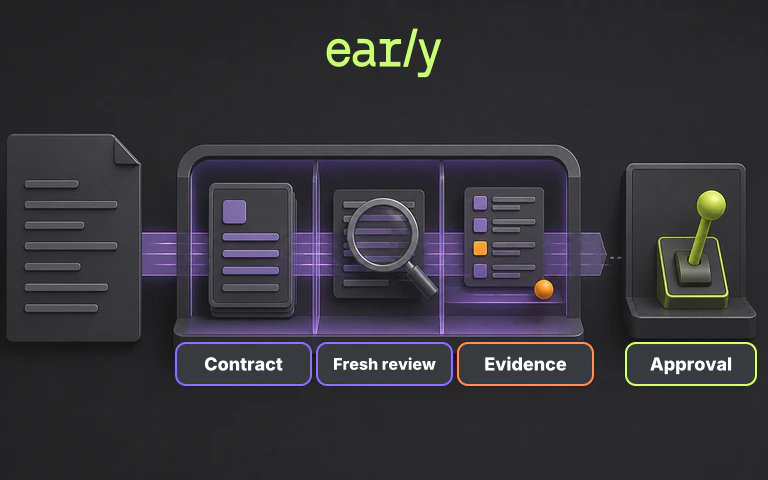
Part 2 lays out that model: a clear task contract, maintained context, bounded execution, independent verification, and accountable approval.
Frequently Asked Questions
What is vibe coding in 2026?
Vibe coding is building software by describing the intended outcome and letting an AI system produce much of the implementation. Modern coding agents can also inspect repositories, edit files, run commands, test changes, and prepare pull requests.
How is agentic coding different?
Vibe coding describes a human interaction style centered on outcomes and natural-language direction. Agentic coding describes a system that can plan and execute multiple development steps using tools and repository context.
Are coding agents production-ready?
Coding agents are capable of substantial production engineering work. Their output still needs explicit intent, maintained context, bounded access, independent verification, and accountable approval before release.